Sowing the Future Together: New Farmer Initiative "COMMON GROUND" in India
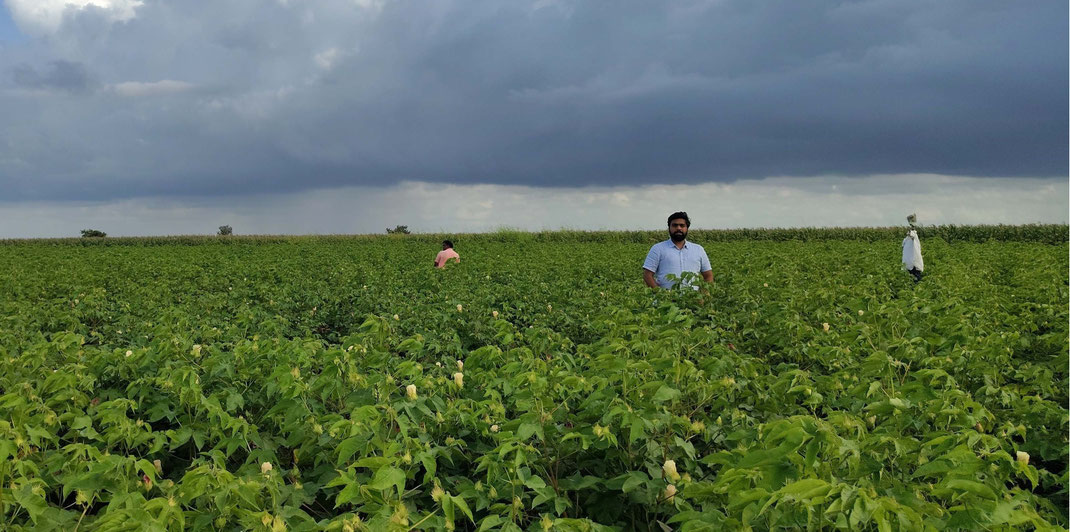
Amid the rural landscapes of southern India, a new chapter is unfolding – a story of hope, collaboration and sustainable transformation. In Haveri district, Karnataka, an ambitious farmer project has been launched to support smallholder farmers on their journey towards organic, regenerative cotton cultivation.
With the support of the Good Textiles Foundation, Dibella India, Gallant Regenerative Organic Private Limited (GROPL) and the local farmer organisation Spoorthi Raith Producer Company Limited (FPO), a new Organic Cotton Grower Group (OGG) is being established – united by the shared goal of bringing people and nature into harmony.

A project that begins with people
Initial site visits, personal discussions with farmers and professional exchange with the University of Agricultural Sciences, Dharwad laid the foundations for the project as early as 2024. In 2025, this was followed by intensive field engagement: soils were assessed, project teams trained, village communities involved and the first farmers registered.
Seven carefully selected villages now form the heart of the project. Their selection was based not only on location and infrastructure, but above all on the commitment of the local people – their willingness to embrace new approaches and build something together.
- Strategic location: All villages are situated within an easily accessible radius of 15–20 kilometres.
- Strong communities: Local leaders and active villagers are driving the transformation.
- Significant development potential: Existing resources enable the creation of a model that can be replicated in other regions in the future.
To date, 510 farmers have been identified, of whom 475 are already in the final stages of enrolment.
Sharing knowledge, Buidlding Structures, strengthening Trust
Designed as a three-year initiative, the project combines technical expertise with close personal support:
- A sound budget framework ensures long-term implementation. The GoodTextiles Foundation is supporting the project during the first three years with €30,000 per year.
- A dedicated team, including an ICS Manager and field staff, continues to grow.
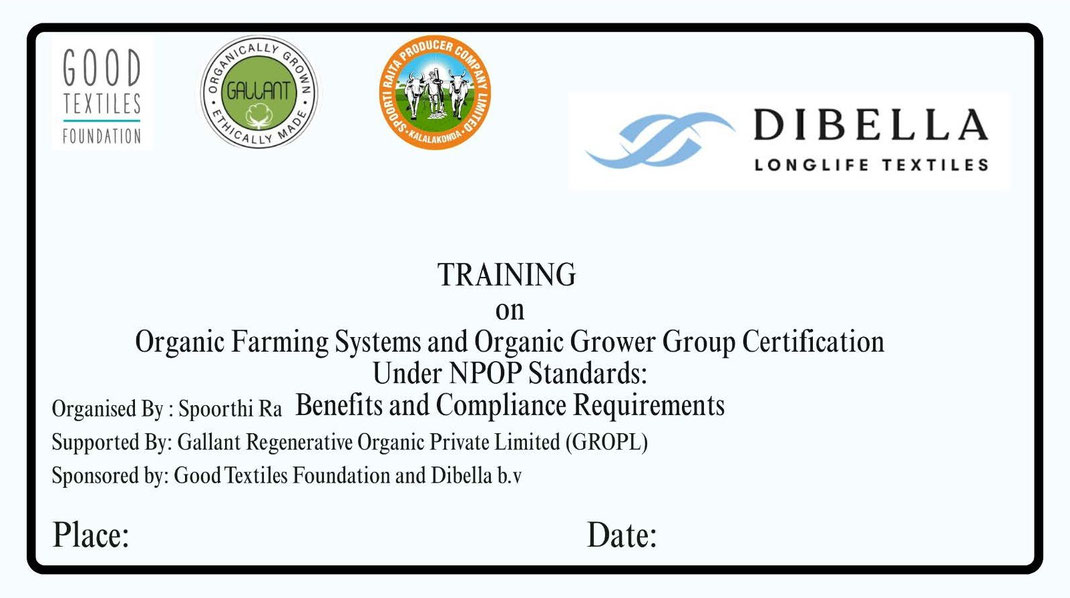
- Targeted training sessions introduce farmers to organic cultivation methods and certification requirements.
- External experts are developing location-specific “Packages of Practice” as well as watershed-level measures.
- Digital farm documentation with GPS mapping ensures transparency from the outset.
More Than Cotton: An Investment in the Future
This project represents far more than sustainable cotton cultivation. It creates new income opportunities for families, promotes healthier soils, protects water resources and enhances biodiversity. Above all, it strengthens farmers’ independence and their confidence in an agricultural system that can provide a livelihood for generations to come.
Together with its partners, the GoodTextiles Foundation is establishing a scalable model for regenerative value creation – from seed to finished textile. Step by step, a transparent and responsible supply chain is taking shape.
And with every field converted to organic and regenerative cultivation, with every training session and every conversation, something lasting is growing: a community that is sowing the future.
Progress
Here you will find the progress documented on a regular basis.
July, 9th 2026
Sharing knowledge, establishing structures, building trust: Our 3-year plan for regenerative agriculture in India
The transition from conventional to regenerative agriculture is a multi-year process that often entails existential risks for smallholder farmers. To safeguard them during this critical period, we have set up Common Ground as three-year, financially sure initiative.
Our support for the farmers in Karnatka comprises four central pillars:
- GMO-free seeds and farming practices: Distribution of high-quality, non-GM seeds and training on cover crops and soil health
- Water management: External experts are developing concepts at the catchment area level (e.g. agricultural ponds) to mitigate the impacts of droughts
- Expert knowledge: Site-specific agricultural training in cooperation with agronomists
- Digital transparency: GPS-supported farm documentation guarantees absolute traceability along the supply chain
Our long-term goal is amitious: After the transition phase, we are aiming not only for GOTS and Fairtrade certification but also for the ROC (Regenerative Organic Certified) standard in the third year.
The project therefore goes beyond sustainable cotton: it promotes livig soils and secures the long-term economic independance of the farmers.

June, 11th 2026
475 Farmers, 7 villages, 1 common goal: regenerative agriculture.
With an average land holding of less than 1.0 hectare per farmer, land fragmentation in Karnataka is high. Transitioning to new, chemical-free farming methods initially poses a risk for the farmers.
That is why our work began long before the first seeds were sown. As early as 2024, we started with site visits, soil assessments and in-depth discussions with the University of Agricultural Sciences, Dharwad.
Today, seven villages form the heart of our project. Their selection is based on clear criteria:
- Strategic location: A compact radius of 15-20 kilometres allows for efficient expert support from our field staff
- Stong communities: Local leaders are actively driving the change
- Scalability: The rich soils and the farmer's motivation offer the potential to build an agroecological model that can later be applied to other regions
Through this approach, we have identified 510 farmers so far. 475 of them are already in the final stages of registration and are ready for the transition. We look forward to this collective transition towards regenerative agriculture.